
Mechanical and electrical design for low-carbon buildings
Jupiter Engineering is an independent M&E consultancy. We work from early feasibility through detailed RIBA-stage design and construction support, and we monitor the systems we design once they are running.
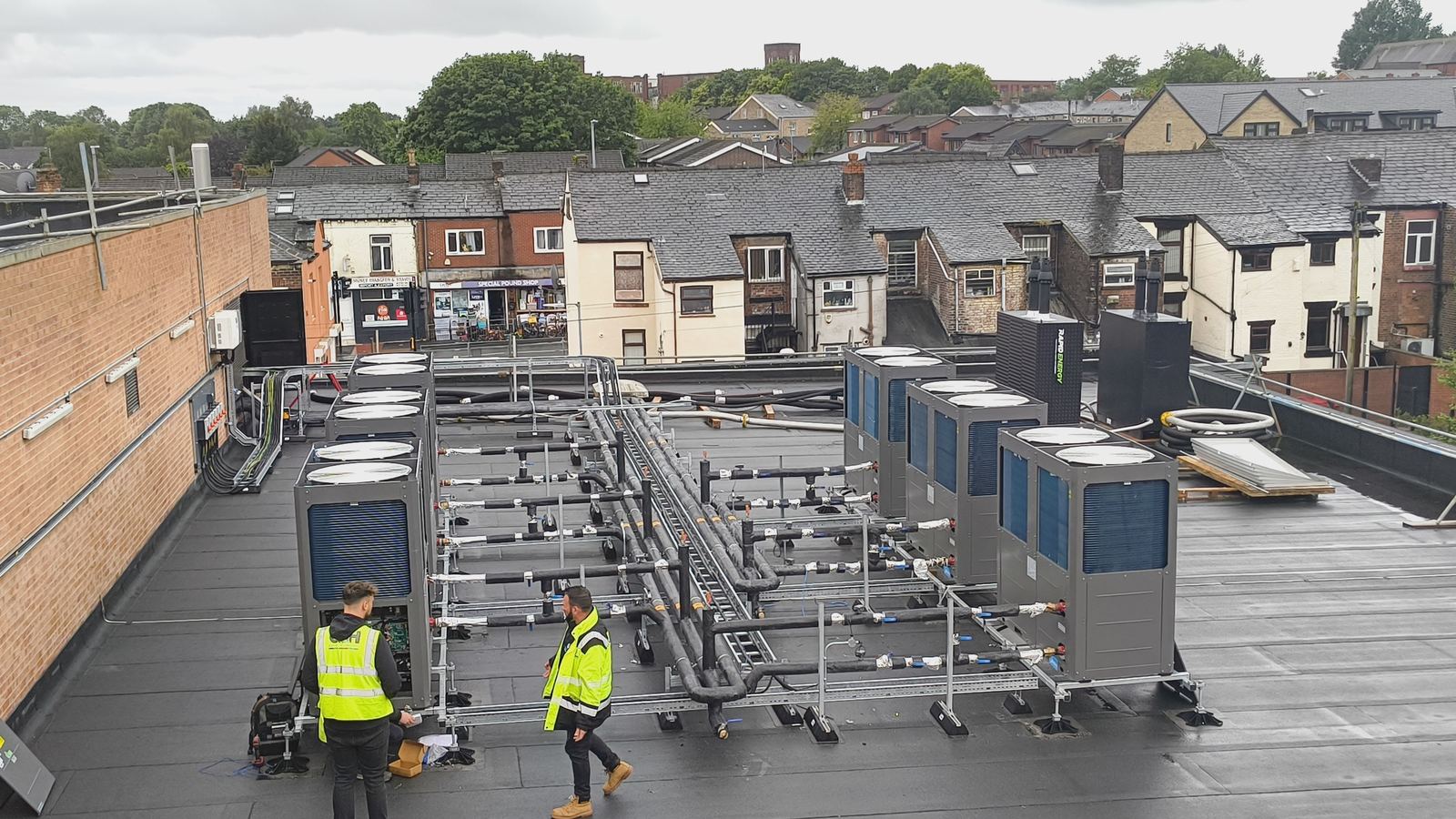
Across twelve grant-funded schemes delivered to date. Carbon figures are lifetime; the equivalent annual saving is 2,414 tCO2e.
Design, decarbonisation and monitoring
Most consultancies finish at handover. We carry on, so the design can be checked against how the building actually runs.
Mechanical & electrical design
M&E design from concept through to construction and site support, for new build, refurbishment, plant replacement and low-carbon retrofit.
- Heating, cooling and heat pump systems
- Ventilation, AHU and air quality
- Electrical infrastructure, capacity and lighting
- DNO applications and grid connections
- Public health and domestic water systems
- Independent design review and technical advisor roles
Heat decarbonisation
Feasibility studies and decarbonisation plans that target the most affordable route off fossil fuels, with a realistic view of capital cost, running cost and buildability.
- Feasibility studies and decarbonisation plans
- Every option costed side by side
- Solar PV, battery and thermal storage appraisals
- Electrical capacity and grid constraints
- Phasing that fits the capital available
- Funding routes as they currently stand
Heat pump design
Air, water and ground source systems for existing buildings, sized from what the building actually uses rather than from the plant being replaced.
- Sizing from metered demand
- Emitter output at the intended flow temperature
- Domestic hot water strategy
- Electrical capacity and true cable rating
- Acoustics in heating and cooling
- Natural refrigerants and cascade plant
We check the design against how the building runs
Heat pump schemes are funded on promised performance, but few organisations hold independent evidence that the systems are delivering the efficiency, comfort and carbon savings they were funded to deliver.
That is a week from a live site. Heating is measuring 3.50 against a design of 3.20, hot water 2.81 against 2.60, and combined 2.98 against 3.00 — reported as below design rather than rounded up.
Jupiter Performance connects to what you already have, such as Trend, Tridium and meter data. It is vendor-neutral and installer-neutral, and it works on systems designed by other people. Lessons from operation feed back into the next feasibility study and the next design.
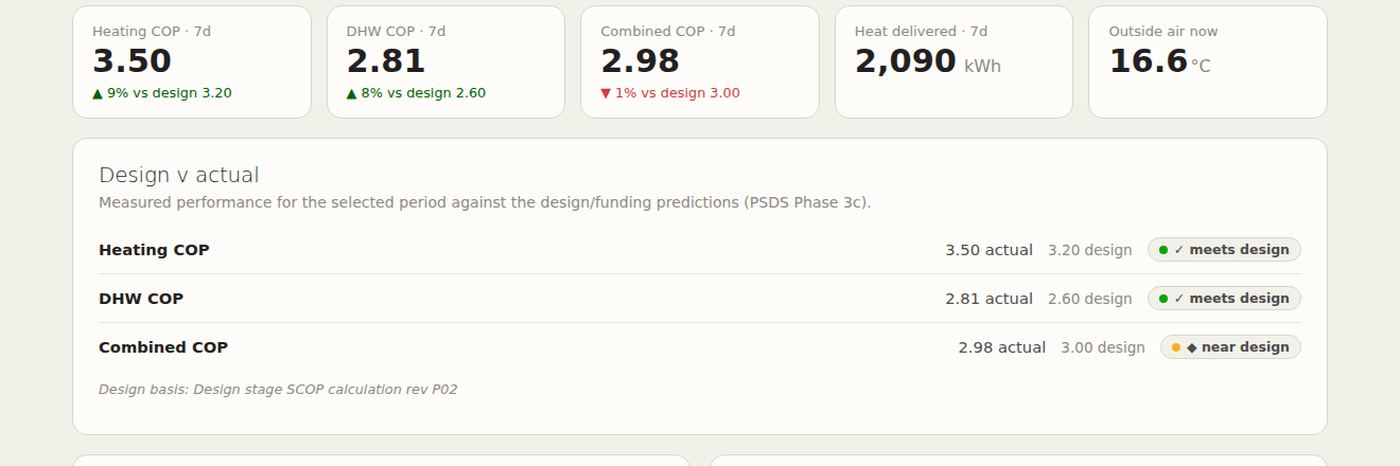 Measured against design, on a live site
The questions that decide most schemes
Running cost
Electricity costs about 4.3 times as much as gas per kWh. A heat pump needs a seasonal efficiency above roughly 4.3 just to break even on running cost, and most retrofit schemes land between 2.5 and 3.5. The Climate Change Committee noted in June 2026 that there is no plan to address this for non-domestic users.
That does not mean do nothing. It means the case has to rest on plant condition, carbon obligation and whole-life cost, with the running-cost consequence stated in the paper rather than discovered in year two.
Electrical capacity
On most retrofits the binding constraint is the electricity supply rather than the heat pumps. A connection quote that arrives after the funding is fixed can end a project.
We assess incoming supply, maximum demand and true cable rating at the start, and raise the DNO enquiry early enough that the answer can still change the design. On one scheme that timing was worth £69,000 on the connection alone.
Director-led, so you get the senior engineer throughout
Coordinated in-house
Mechanical and electrical are developed together rather than handed between consultants. On heat pump retrofit that is where most of the programme risk sits.
Responsive
You deal directly with the engineer doing the work. Two directors, both hands-on, both reachable. Fee proposals come back quickly, and we say early when a programme is not achievable.
Independent
Not tied to any manufacturer or installer. Design decisions are backed by measured performance rather than assumptions alone.
Three of five recent schemes
Client names are withheld. The numbers are ours, taken from the issued design reports.
Pool hall ventilation, four leisure centres
Air handling units replaced across four London leisure centres with no reliable record data. We derived the limiting room dew point from the coldest internal surface rather than assuming a generic 60% RH, and picked up two errors in the schedule before issue.
Read the case studyGrid connection for two schools
We metered rather than estimated. One school's actual maximum demand came out at 28 kVA against a 190 kVA connection offer, and raising the DNO enquiry before the funding application put a £69,000 choice on the table.
Read the case studyListed school with no gas supply
Five options costed from £0.1m to £3.5m across five plantrooms. We recommended a phased hybrid at 67% carbon reduction rather than the 82% option, and set out why in the report.
Read the case studyMost of our work is in occupied buildings
They are usually budget-conscious, technically constrained and cannot simply be shut down for the works. That shapes how we design.
 Education — 17 projects
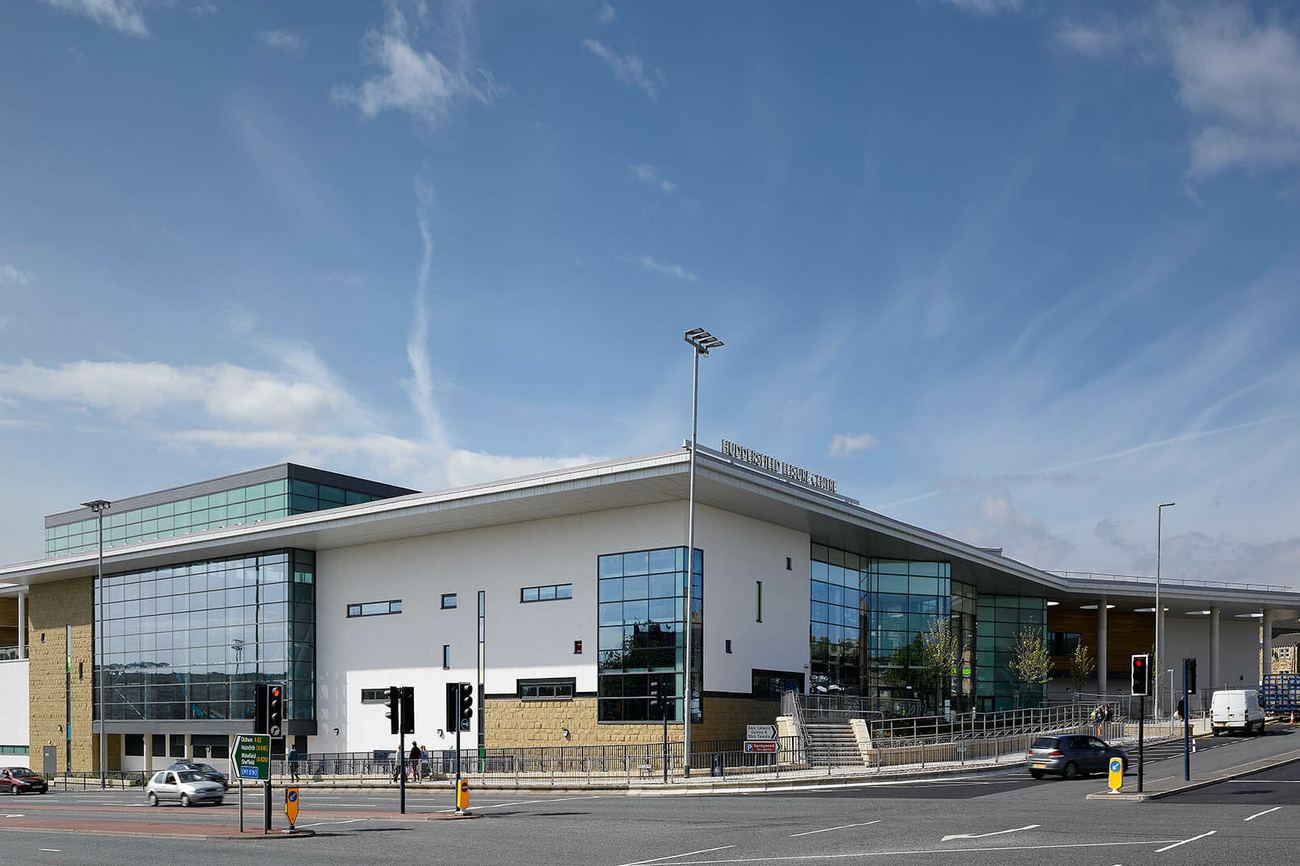 Leisure & civic — 8 projects
 Culture & heritage
 Retail & commercial — 11 projects
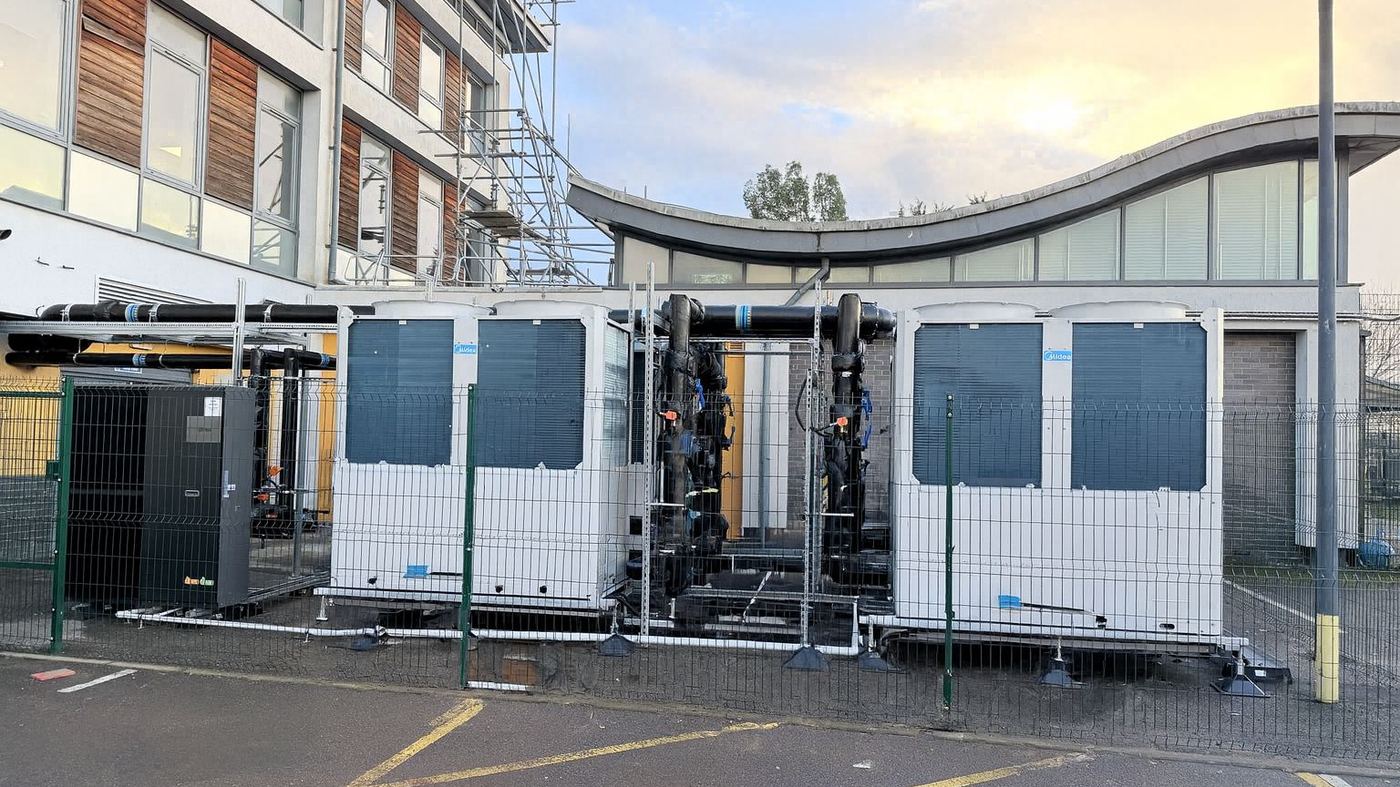
Packaged plantrooms
External plant compounds for sites with no room inside. Heat pumps, buffer vessels, pressurisation and pumps, laid out for access, maintenance and acoustics.
Education and leisure
Low-carbon plant replacement in occupied settings, covering acoustic enclosures, pool hall ventilation, safeguarding and disruption to the timetable.
Solar, storage and capacity
Solar PV, battery and thermal storage appraisals alongside the electrical capacity work and DNO applications that decide whether a scheme is deliverable.
Two directors, both hands-on
Jonathan Aird leads the mechanical side of the decarbonisation work: heat pump design, decarbonisation plans, pool and AHU ventilation strategy and low-carbon building services. Chartered Engineer, Member of CIBSE, and a Certified Measurement & Verification Professional.
Alex Ramsden leads the electrical side and takes DNO applications and grid connections from first enquiry through to acceptance, which is often what determines whether a heat pump scheme is deliverable. Also power distribution, infrastructure upgrades, lighting, controls coordination and photovoltaics.
Between them, over 30 years across all aspects of M&E engineering.
Architects, surveyors, contractors and manufacturers — we also provide specialist M&E capability as part of a wider design team.
Send us the scope
A building, a stage, a date. We will come back with whether we can take it, what it costs and what we would need from you — usually within a working day.
Your questions, answered
Do you design both mechanical and electrical systems?
Yes. Both directors are hands-on, Jon on mechanical and Alex on electrical, so the two are coordinated in-house rather than passed between consultants. Alex also handles DNO applications and grid connections, which is often the constraint that decides whether a heat pump scheme works.
What level of design do you provide?
From RIBA Stage 1 concept through Stage 4 technical design, tender support, construction-stage review and post-occupancy monitoring.
Will a heat pump cost more to run than our gas boilers?
Sometimes, and we will tell you which before you commit capital. UK electricity costs roughly 4.3 times as much as gas per kWh, so a system has to be very efficient to break even on running cost. Where a scheme does save, it is usually because the existing plant is poor, because flow temperatures can be brought right down, or because solar is offsetting the load. We model it explicitly rather than assuming it.
Is PSDS funding still available?
No. The Public Sector Decarbonisation Scheme was cancelled at the June 2025 Spending Review and the Low Carbon Skills Fund has had no allocation since 2024/25. Phase 4 projects run to 31 March 2028 but there are no new applications in England. Scotland's Public Sector Heat Decarbonisation Fund Phase 3 is live, with a 31 March 2027 spend deadline.
Can monitoring be added to an existing heat pump installation?
Yes. Jupiter Performance can be retrofitted to systems already installed and running, including schemes that have passed handover, and to systems designed by other people.
What sectors do you work in?
Education, leisure, public sector, culture and heritage, healthcare, retail, commercial and industrial. Much of the work is in operational buildings where disruption has to be designed out.
Where are you based, and do you work nationwide?
We are a UK practice and work on projects nationwide.
Are you insured and certified?
We carry professional indemnity, public liability and employers' liability insurance; certificates and cover levels are provided on request. ISO 9001:2015 certification is in progress with BSI. Jon is a Chartered Engineer, a Member of CIBSE and a Certified Measurement & Verification Professional. Alex is a Member of the IET.