
Heat pump design consultants
A heat pump scheme is not an equipment selection. It is a design problem covering heat demand, emitters, hot water, electrical capacity, acoustics, plant space and controls all at once — and getting any one of them wrong shows up in the running cost for the next twenty years.
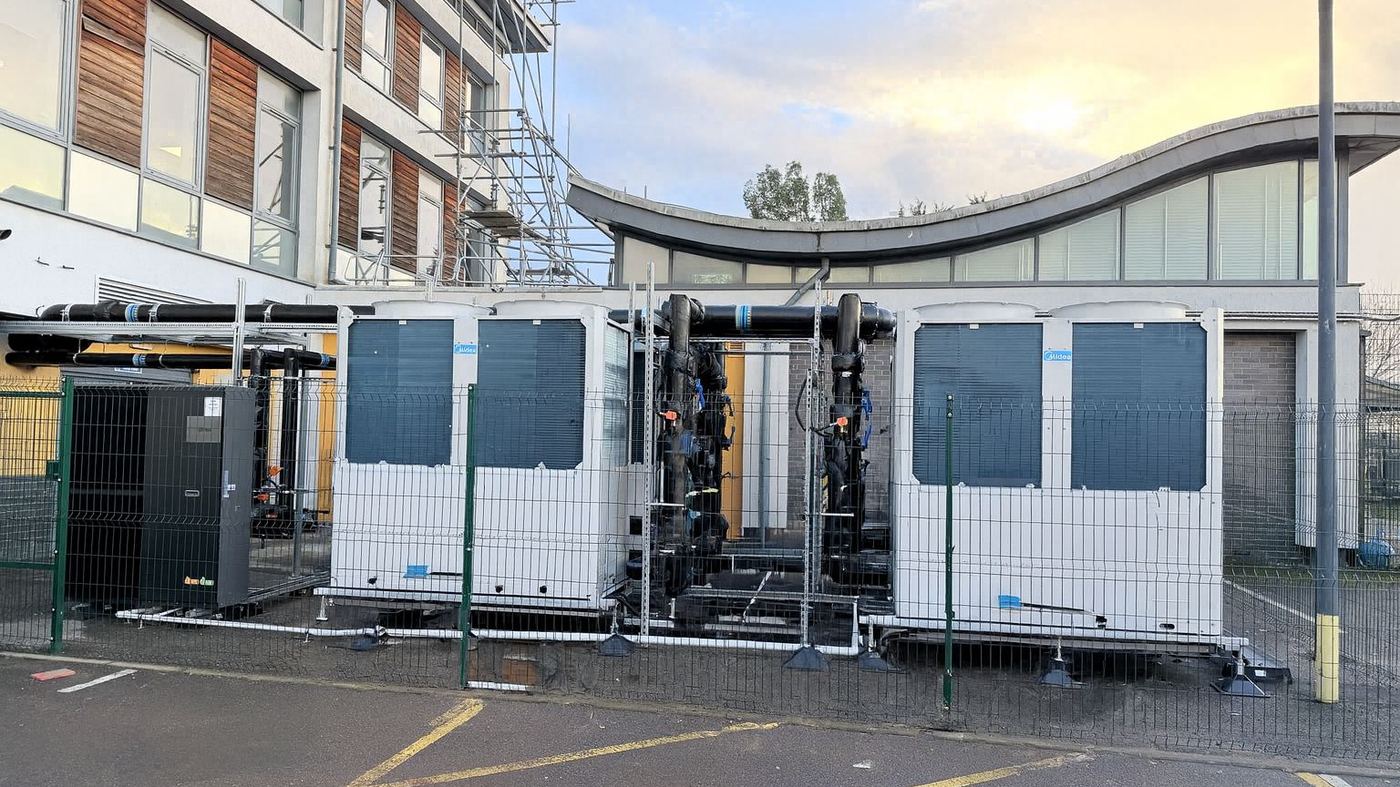
What we assess before selecting plant
- Measured heat demand from half-hourly data and degree-day regression
- Existing distribution and hydraulic capacity
- Emitter output at the intended flow temperature, space by space
- Domestic hot water demand, storage, recovery and legionella strategy
- Plant space, structural loading and external equipment locations
- Incoming supply, maximum demand and true cable rating
- Acoustic limits and the nearest sensitive receptor, in both heating and cooling mode
- Refrigerant selection, charge limits and safety implications
- Defrost behaviour and low ambient performance
- Controls strategy, sequencing, weather compensation and metering
- Phasing, decant and continuity of heat during the works
- Peak-load and resilience strategy, including hybrid arrangements
Manufacturer experience, consultancy independence
Our mechanical director worked at a heat pump manufacturer before moving into consultancy. That shows up in the parts of a design that catch people out: cascade arrangements, natural refrigerant selection, defrost and part-load behaviour, and knowing which numbers on a supplier's data sheet describe conditions your building will actually see.
And because we also measure installed plant, we know what happens to these designs after handover — which tends to make our advice more conservative than a supplier's, and our sizing tighter. The case studies show how that plays out on real buildings.
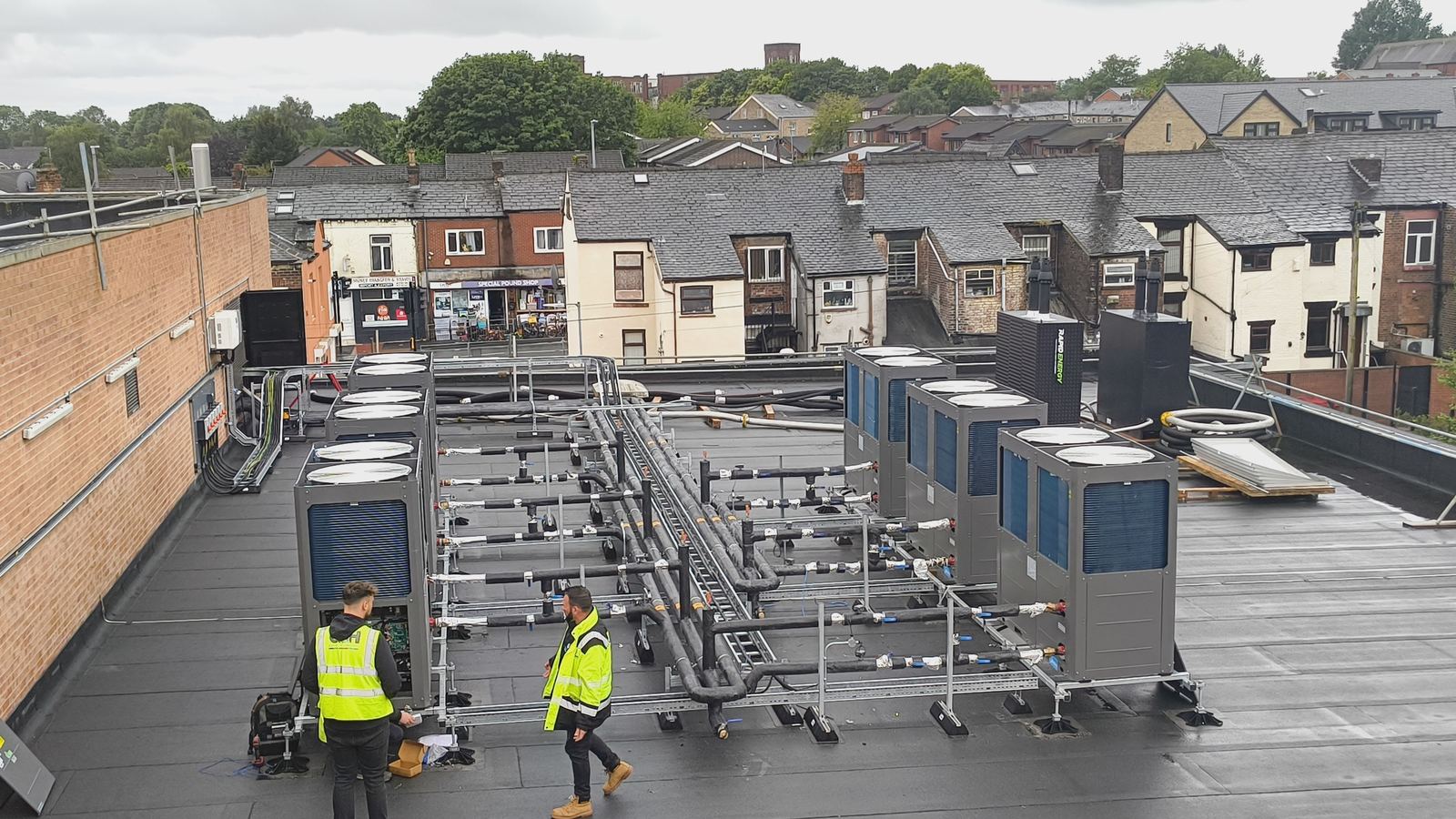
Send us the scope
A building, a stage, a date. We will come back with whether we can take it, what it costs and what we would need from you — usually within a working day.
Your questions, answered
How do you size a heat pump for an existing building?
From measured heat demand, not from the rating of the boiler being replaced. Existing boilers are routinely oversized by a factor of two or more. We work from half-hourly consumption, degree-day regression and an emitter survey. On a recent museum scheme, connected load suggested 428 kW, schedules 404 kW, and regression against outside temperature gave a true peak of 307 kW with a 119 kW mean — a 28% difference between the lazy answer and the right one, and a lot of unnecessary capital.
What flow temperature should a commercial heat pump run at?
As low as the emitters will allow, because the whole business case sits on it. On one scheme, moving from 75/65 °C to 55/45 °C took seasonal COP from 2.58 to 3.54 and cut running cost by nearly £11,000 a year. Many retrofit schemes land between 50 and 60 °C. High-temperature and natural refrigerant machines can go higher where distribution cannot be changed, at a real cost in efficiency. The answer comes from the emitter survey, not a rule of thumb.
Do we have to replace all the radiators?
Usually not. Emitter output falls as flow temperature drops, so the question is which spaces fail at the temperature you intend to run. In most buildings a minority of rooms are the binding constraint and targeted replacement is far cheaper than a wholesale change. That assessment is a standard part of our design work.
Is there enough electrical capacity?
Often that is the real constraint. We assess incoming supply, maximum demand and available headroom early. Note that a connection agreement is not the same as the incoming cable rating — we have found sites with a 400 kVA agreement and a cable that appears rated at 195 kVA. Where reinforcement is needed, the DNO cost and lead time can dictate the whole programme.
What about domestic hot water?
It is usually the hardest part of the design, especially in leisure, healthcare and residential settings. Temperature requirements, legionella control, storage volume and recovery, undersized heat exchangers and poor control strategy all pull against efficiency. We design the hot water strategy explicitly rather than bolting it on.
Do you work with natural refrigerants?
Yes. Propane (R290), CO2 and ammonia each suit particular duties. We have specified R290 modules at 182 kW and −4 °C on 75/65 °C flow with an 11.2 kg charge per module, which brings real safety, charge-limit and plant location implications that have to be designed for.
What about noise?
It is routinely underestimated. Cooling mode is usually the worst case — we have assessed schemes at 46–49 dB(A) rating level against local authority limits of 42 day and 39 night. Attenuation, location and operating mode all matter, and it needs assessing at design stage, not at planning.